
Free written scope consultation - allowances, timeline, and change-order rules on paper before a single trade is scheduled
Jerith Home Additions & ADU: The Houston Owner’s Guide
Most Jerith home additions and ADUs in the Houston market run $45,000 to $130,000 depending on square footage, foundation work, and whether the structure ties into existing plumbing and electrical. That’s a real range, and we’ll give you a written line-item price before any work starts. The typical homeowner discovers their Jerith addition or ADU is failing through water intrusion at the roofline tie-in, door frames that won’t square up after Houston’s clay soil shifts, or electrical circuits that trip when the mini-split kicks on. You’ll feel it before you see it: a door that suddenly sticks, a floor with a soft spot, a utility bill that jumped without explanation.
Bradford Remodeling Co Houston is an independent service provider, not affiliated with Jerith. We stock the common Jerith-compatible hardware, flashing, and framing members on our trucks, and we order the rest direct from suppliers with documented specs.
Which Jerith Models This Applies To
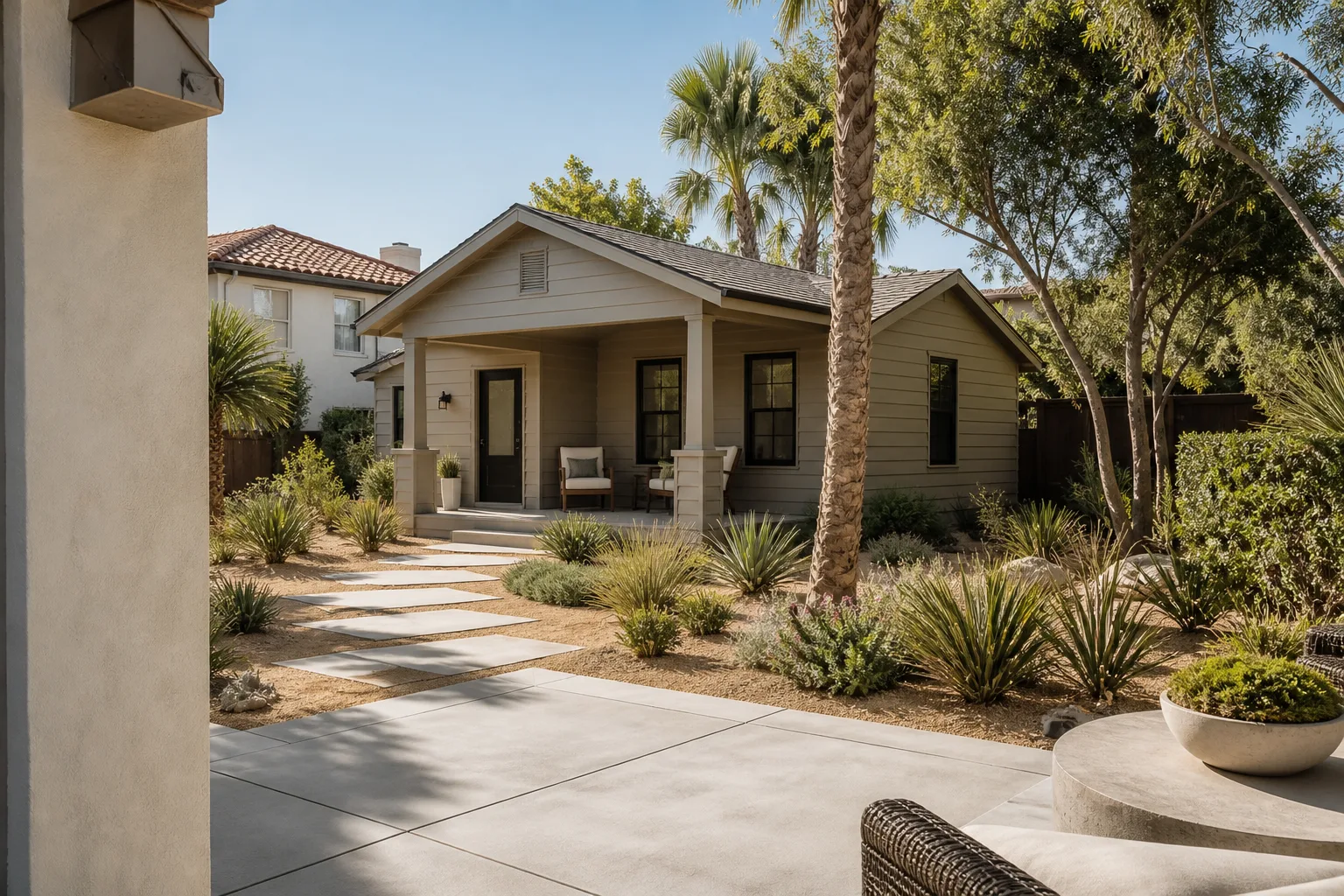
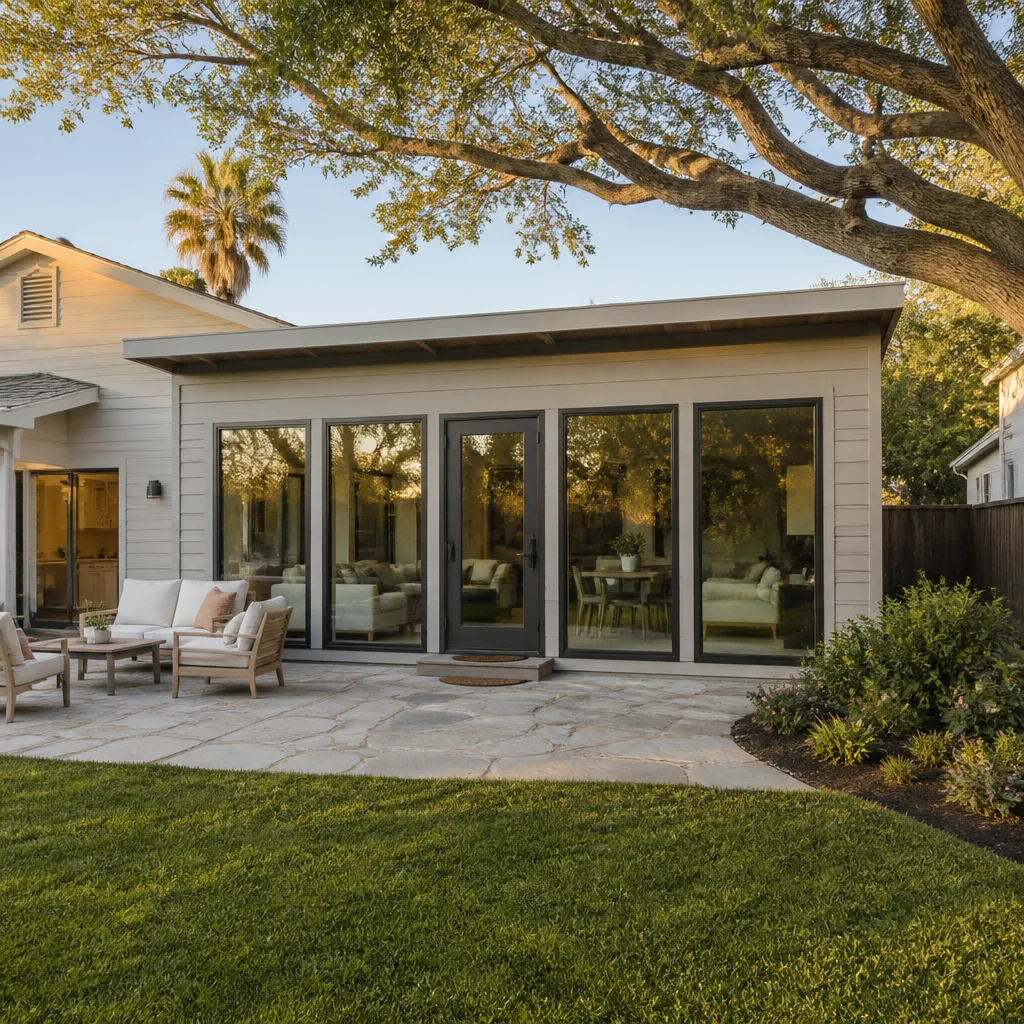
Jerith residential additions and ADUs typically fall into two compatibility buckets: site-built additions tied to an existing slab, and prefabricated ADU shells that get finished on-site. The parts that fail most often are shared across both: sill plate anchors, roof-to-wall flashing, TPO-to-shingle transition seams, and exterior door threshold assemblies. If you’re trying to identify what you have, look at the corner trim detail and the roof tie-in. A Jerith site-built addition usually has a visible seam where the new roofline meets the original structure, while their prefab ADU shells carry a manufacturer ID plate on the interior of the electrical panel door or the inside face of the exterior wall framing nearest the front door.
For OEM versus aftermarket: Jerith’s original flashing and sealant specs were designed for drier climates. In Houston, we routinely replace their standard transition flashing with a heavier-gauge, wider profile that holds up better to sideways rain and the humidity that sits on a roofline from April through October. The OEM part will fit, but the aftermarket upgrade will last. We’ll show you both options and the price difference in writing before you decide.
Styles & brands we work with







Signs Your Jerith Home Additions & ADU Is Failing
- Water staining at the ceiling-to-wall junction where the addition meets the main house. This is almost always a failed transition flashing. Houston’s rain drives sideways, and a thin-gauge flashing will bend, lift, and let water move behind it.
- Doors that stick in summer and swing free in winter. Houston’s clay soil expands and contracts with moisture. If the addition’s foundation wasn’t tied correctly to the main slab, you’ll see seasonal movement in the door frames and window casings.
- Floor soft spots near exterior walls. This means water is getting under the sill plate. In a Jerith addition, the usual culprit is a failed seal at the base of the exterior sheathing where it meets the slab edge.
- Circuits that trip when the air conditioning or mini-split runs. Houston’s load calculations are different from the specs Jerith built to. Undersized wiring or a panel that’s maxed out will reveal itself on the first 95-degree day.
- Musty smell that comes back after cleaning. That’s a moisture problem behind the drywall, almost always tied to a slow leak at a flashing point or a failed vapor barrier under the floor. It won’t go away on its own.
See the difference
 Before
 After
After Before
 After
After Before
 After
AfterReplacement Cost & What’s Included
The $45,000 to $130,000 range covers the scope of a Houston Jerith addition repair or ADU correction, not just parts. On the low end, you’re looking at a defined repair: replacing transition flashing, re-anchoring a sill plate, correcting a door frame, and re-sealing the exterior envelope. That runs roughly $45,000 to $60,000. On the high end, you’re dealing with a full foundation correction, structural reframing, or a complete re-skin of the exterior, which pushes the job past $80,000 and can reach $130,000 when plumbing and electrical rough-in work is involved. Every number we give you is line-itemed with parts and labor separated, so you see exactly what you’re paying for. The Garrison Standard means that written price does not move once the work starts.
Every completed job carries the 365-Day Done Right Promise: if anything we touched fails inside a full year, we come back and correct it at no charge. That’s in writing, in your hand, before you sign anything.
DIY or Call Us?
Here’s the straight answer. You can safely check a few things yourself: look for visible gaps in the flashing where the addition roof meets the main house, check if water pools at the slab edge after a rain, and note which doors stick and when. What you should not do is pull up flooring, open walls, or attempt any structural or electrical work on a failed Jerith addition. You’re dealing with load-bearing members, electrical circuits, and Houston’s soil movement. A wrong move with a structural tie or a panel can turn a $5,000 fix into a $60,000 rebuild, and worse, it can put you and your family at risk. Curtis Lane has spent over a decade running crews in Houston on everything from Montrose gut-rehab kitchens to full structural repairs after storm season. He reads a scope of work the way other guys read a box score: fast, accurate, and without missing anything in the fine print.
If you see water, movement, or electrical issues, call us at (940) 289-7658. We’ll come out, look at it, and give you a straight number. Straight scope, straight number, that’s the whole conversation.
FAQs
In Houston’s climate, a well-built Jerith addition should last 20 to 30 years on the structural framing, but the flashing, sealants, and exterior penetrations typically need attention every 8 to 12 years. The humidity and storm-driven rain shorten the service life of any exterior seal compared to drier markets. Call (940) 289-7658 and we’ll inspect yours and tell you exactly what’s left in it.
Most failing Jerith additions can be repaired if the problem is caught at the flashing, seal, or door-frame level; a full rebuild is only necessary when water has been moving through the framing or slab for years. We’ll tell you which one you’re looking at and put both costs in writing. Estimates are free, and the number won’t move once we start.
A typical flashing and seal correction takes three to five working days; a foundation tie-in or structural reframe runs two to four weeks depending on scope and weather. We’ll give you a written schedule before the first day of work, with the finish date on it.
We keep common Jerith-compatible flashing, sill anchors, threshold assemblies, and sealants on our Houston trucks. Specialty framing members and prefab panel hardware are ordered direct from our suppliers, usually within three to five business days. Call (940) 289-7658 and we’ll confirm what’s on the truck today.
Written by Curtis Lane, Owner, Bradford Remodeling Co Houston at Bradford Remodeling Co Houston, serving Houston and nearby areas.


