
Free written scope consultation - allowances, timeline, and change-order rules on paper before a single trade is scheduled
Cover Home Additions & ADU: The Houston Owner’s Guide
Home additions and ADU construction in Houston typically run $45,000 – $130,000 installed, depending on square footage, foundation work, and whether we’re tying into existing HVAC and plumbing or running new lines. Most Cover-compatible projects take 10 – 16 weeks from permit to final walkthrough. If your existing addition or ADU is showing signs of failure, we can usually assess the scope within a few days and put a written number in front of you before any work starts.
What brings most Houston owners to this page is a specific problem: a garage conversion that’s pulling away from the main house, an ADU with slab settling, or a room addition where the roofline tie-in is leaking every time a Gulf storm rolls through. You bought a Cover product expecting it to hold up. When the structure, the envelope, or the systems start failing, you need someone who reads the scope the way Curtis Lane reads a box score: fast, accurate, and without missing anything in the fine print.
Which Cover Models This Applies To
Bradford Remodeling Co Houston is an independent service provider, not affiliated with Cover. That said, we work on Cover home additions and ADUs across the model range, including single-story bump-outs, garage conversions, and detached ADU structures. The compatibility question that matters most in Houston isn’t the model number on a placard. It’s the original construction method.
Here’s the compatibility gotcha most owners miss: Cover additions and ADUs that were panelized or modular have different tie-in points than site-built structures. If your unit was delivered in sections and assembled on-site, the wall-to-roof connection and the marriage line between modules are where failures start. If it was stick-built under a Cover permit, the weak points are usually at the ledger board where the addition roof meets the main house, and at the foundation joint. We identify the construction type before we quote a repair or replacement, because the fix is different and the price is different.
When we assess a Cover structure, we check the original specification sheets if the owner has them, take field measurements to confirm what’s actually there, and match materials to the existing envelope, not just the easiest thing to order. For owners weighing OEM-spec replacement materials versus quality aftermarket equivalents, we recommend OEM-match for structural connectors and flashing, and we’re comfortable with aftermarket equivalents for interior finishes where manufacturer specs are met. We also stock parts for other brands: KraftMaid, Cambria, and Silestone, if your addition or ADU has a kitchenette or bath with those lines.
What We Check on Every Cover Addition or ADU Assessment
Before we quote a repair or full rebuild, we walk the structure and document what’s actually failing. That written scope is what your price is built on, so there are no surprises at the door. We look at:
- Foundation and slab joint: Houston clay soil expands and contracts through wet-dry cycles. A Cover addition or detached ADU on a shallow slab will telegraph movement through the marriage joint and door frames first.
- Roof tie-in and flashing: The junction where the addition roof meets the main house is the first place water finds a way in. We inspect flashing, underlayment, and the seal condition.
- Electrical and plumbing rough-in: If the addition or ADU was delivered with pre-run systems, we verify the rough-in is still sound and code-compliant before we touch finishes.
- Envelope integrity: Siding, soffit, and window flashing take a beating in Houston humidity and storm-driven rain. Failed caulk joints and swollen trim tell us where moisture has been sitting.
- HVAC connectivity: Additions with undersized duct runs or a poorly matched mini-split never hold temperature. We flag it in the scope, not after the drywall is up.
Styles & brands we work with







Signs Your Cover Home Addition or ADU Is Failing
Most owners don’t notice a structure failing until the evidence is loud. Here’s what we regularly see across Houston, from Montrose gut-rehabs to storm-season structural repairs, and what each symptom actually means.
- Doors and windows that stick or won’t latch. That’s movement. Houston’s clay soil swells when wet and shrinks when dry, and a Cover addition or ADU on a foundation that wasn’t engineered for that cycle will shift enough to rack a door frame. When three doors in a structure stick at once, it’s not humidity on the hinges. It’s the frame moving.
- Cracks at the wall-to-roof junction or along the ceiling line of the marriage wall. Modular and panelized Cover units concentrate stress at their connection points. A widening crack at that seam means the sections are working against each other, and the tie-in is losing its grip.
- Water stains on the ceiling near the addition-to-house tie-in. Flashing fails before the shingle does. By the time you see a stain, water has been moving through the roof assembly for months, and you’re now looking at potential substrate damage under the finish.
- A musty smell that won’t leave, specifically in the addition or ADU. That’s retained moisture in the wall cavity or under the flooring. In Houston’s climate, a damp cavity grows mold fast. A dehumidifier masks it. Opening the envelope to find the source is the only real fix.
- Floors that feel springy or slope toward one corner. Floor joists or a failing slab edge don’t recover on their own. If a floor dips visibly across a room, the structure underneath is compromised and needs shoring, not leveling compound.
Replacement Cost & What’s Included
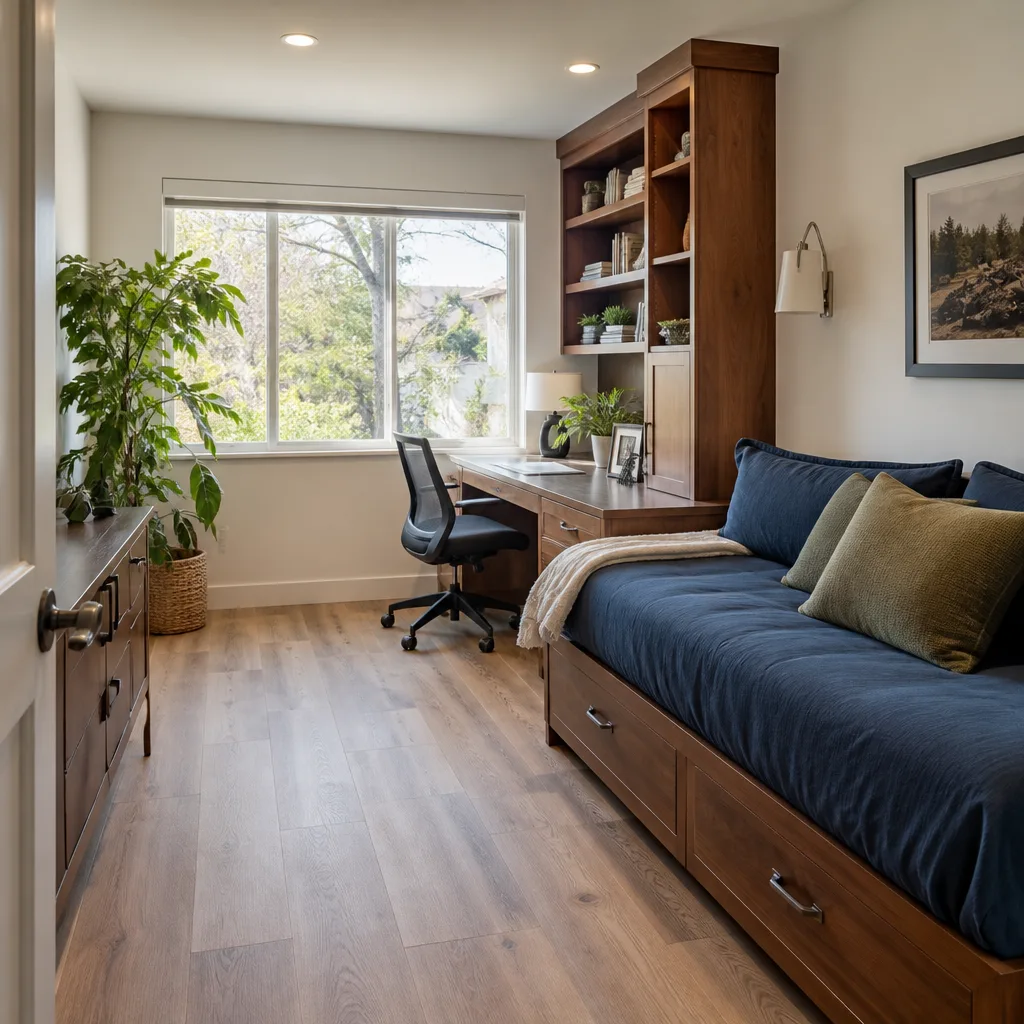
In Houston, full home additions connected to an existing structure run $45,000 – $130,000. Detached ADU construction runs $90,000 – $220,000. Garage conversions run $30,000 – $80,000. The spread comes down to square footage, foundation type, how much of the existing envelope has to be opened, and whether we’re repairing or replacing the systems inside.
Here’s the line-item reality of what’s included in a Bradford Remodeling Co Houston quote:
- Written scope of work with every phase itemized, before any work starts. No numbers that move at the door.
- Permits pulled and inspections scheduled by us, with the permit cost shown as its own line item.
- Materials specified by brand and model. You’ll see the actual product designations, not “contractor grade” or similar shorthand.
- Labor and trade work priced by phase: framing, rough-in, finish work, punch list.
- Disposal and site cleanup as an included line, not a surprise add-on at the end.
- The 365-Day Done Right Promise on every completed project. If the work fails inside that window, we return and correct it at no charge. You get that in writing, signed, in your hand at job close.
As for parts-only replacement on an existing Cover structure, like a failed ledger connection, flashing replacement, or a marriage joint repair, those jobs typically fall into a smaller repair scope we quote on-site after we open up the affected area and see what we’re working with. Most repair scopes in Houston run from a few thousand dollars for flashing and seal work up to $20,000 or more when framing, insulation, and drywall have to be stripped and rebuilt.
See the difference
 Before
 After
After Before
 After
After Before
 After
AfterDIY or Call Us?
There’s a real safety line here. If the failure is structural, leave it alone. A ledger board pulling away from the house under load, a sagging roof section, a cracked marriage joint, or a foundation that has visibly moved is beyond what a homeowner should touch. Those are load-bearing connections. When they fail, they fail suddenly, and the weight doesn’t ask first. We’ve seen DIY attempts on tie-in repairs turn a $4,000 flashing job into a full structural rebuild.
What an owner can safely check: visible flashing that’s lifted or torn, caulk joints that have dried and cracked, and moisture evidence around windows and door sills. You can document what you see and keep water out in the short term with proper sealing materials. But when the symptom points to movement, racked framing, or water inside the assembly, that’s a trained professional’s call, not a weekend. If you see cracks widening across months, call us at (940) 289-7658. A written assessment costs you nothing, and it tells you what you’re actually dealing with.
FAQs
A properly built home addition or ADU in Houston should stand structurally for 50 years or more, but the systems inside it (roof, HVAC, windows, flashing) have shorter lives: 15 – 25 years for a roof, 10 – 15 years for most HVAC equipment, and 20 – 30 years for quality window units. Houston’s humidity and storm cycles beat on everything faster than a dry market. If your Cover structure is failing inside 10 years, the problem is usually a specific construction detail, not normal aging. Call (940) 289-7658 and we’ll identify which one.
Repair is viable when the failure is isolated: flashing, a section of rotted framing, a settlement crack that hasn’t kept moving, or a door opening that can be re-shimmed and re-squared. A rebuild is the more honest call when the marriage joint has separated, the foundation is actively settling, or water has been inside the wall cavities long enough to compromise the framing across multiple stud bays. We’ll tell you which one you’re looking at, in writing, after we inspect it. That’s the whole point of a written scope.
A focused structural repair on a Cover addition or ADU, like a ledger replacement or a marriage joint rebuild, typically takes 1 – 2 weeks including inspection wait time. A full room addition from slab to finished space runs 10 – 16 weeks in Houston, with weather and permit review as the two biggest schedule variables. Every Bradford Remodeling Co Houston scope includes a written schedule with milestones, so you know when each phase starts and finishes.
Neither. Cover structures use standard dimensional lumber, engineered connectors, flashing, and fasteners that we source from Houston suppliers and match to the original specifications. The “part” that matters is the connection detail: the hangers, straps, and load-path hardware specified for the original design. We use manufacturer-specified connectors from brands like Simpson Strong-Tie, and we verify the load ratings before installing. If a Cover spec sheet calls for a specific connector, we match it exactly. That’s what keeps the repair honest.
No. The written price you receive from Bradford Remodeling Co Houston is built on a documented scope of work. If we open a wall and find damage we couldn’t see from the outside, we stop work, show you what we found, and put the change in writing before we proceed. No numbers move at the door, and no work happens on a handshake supplement. The 365-Day Done Right Promise covers everything we complete, in writing, for a full year.
Get Your Written Estimate in Houston
If your Cover home addition or ADU is showing cracks, racked doors, water stains, or movement at the tie-in, don’t guess and don’t wait. Call Bradford Remodeling Co Houston at (940) 289-7658. We’ll schedule an assessment, walk the structure with you, and put a written scope and a straight number in your hand. Straight scope, straight number – that’s the whole conversation.
Written by Curtis Lane, Owner, Bradford Remodeling Co Houston at Bradford Remodeling Co Houston, serving Houston and nearby areas.


