
Free written scope consultation - allowances, timeline, and change-order rules on paper before a single trade is scheduled
CWS Home Additions & ADU: The Houston Owner’s Guide
When a CWS home addition or ADU develops a structural problem in Houston, the repair typically lands between $45,000 and $130,000 depending on what failed, how far the damage runs, and whether we’re rebuilding framing, tying in new foundation work, or replacing failed waterproofing systems. We stock the common CWS-compatible structural components, flashings, and fasteners on our trucks, and our crew can assess the failure, price the scope in writing, and get the rebuild scheduled without a runaround. Most owners spot the trouble the same way: a door that won’t close after a dry summer, a hairline crack that widens through the first wet month, or a soft spot in the floor near a tie-in point where the addition meets the original slab.
Bradford Remodeling Co Houston is an independent contractor. We’re not affiliated with CWS, but we’ve repaired and rebuilt enough CWS home additions and ADUs across Houston to know exactly where these structures fail and what it takes to fix them right.
Which CWS Models This Applies To
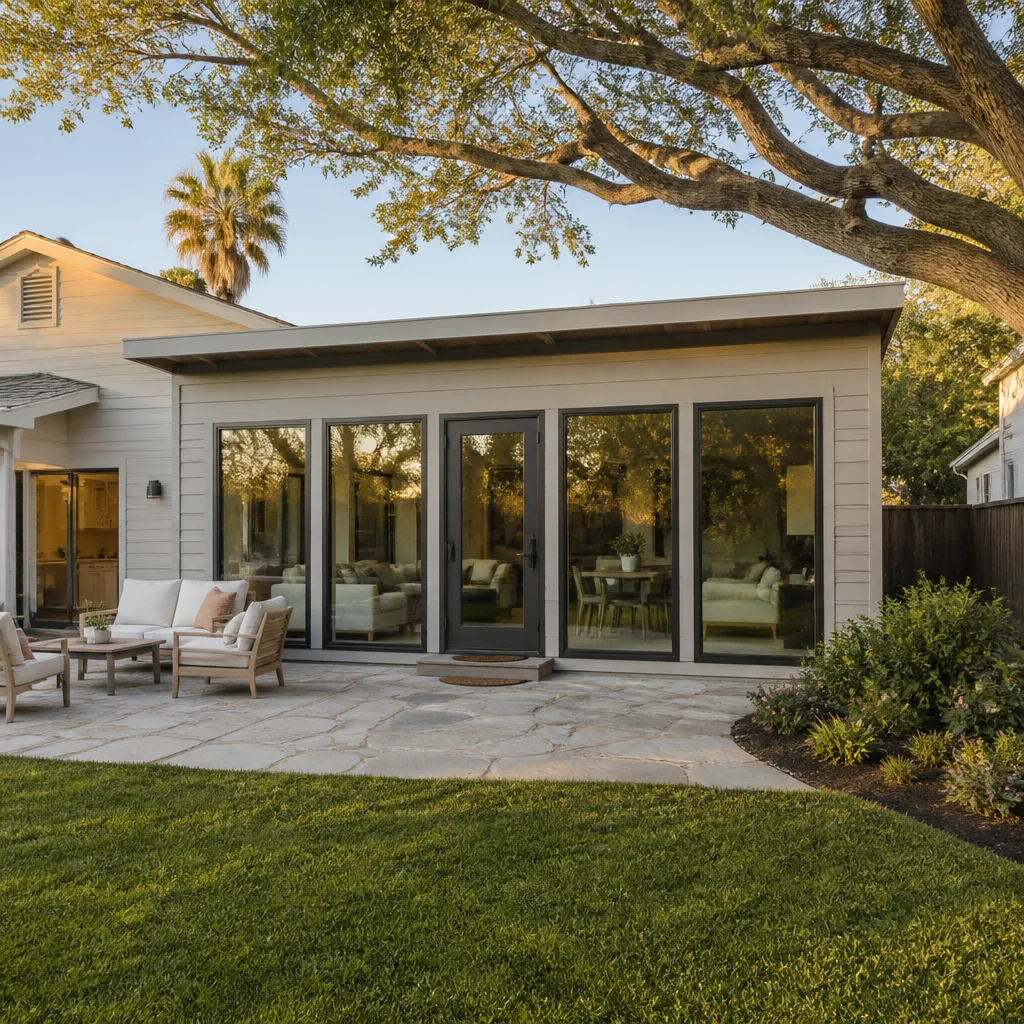
CWS home additions and ADUs in Houston follow a fairly consistent framing and tie-in spec across their product line, which means most compatibility questions come down to three things: the age of the structure, the foundation type, and the original wall assembly at the point where the addition ties to the main house. The two big variations we see are pier-and-beam additions (common in older Heights and Montrose lots) and slab-on-grade ADUs (dominant in newer construction across Katy, Cypress, and Sugar Land). The tie-in method differs: pier-and-beam uses a ledger bolted through the existing band joist, while slab work uses a cold joint with rebar dowels and an expansion filler.
For parts matching, check the permit packet or original scope sheet from the CWS build for a wall-section drawing. That drawing will list the sheathing type, the flashing spec, and the fastening pattern. If you don’t have that packet, a visual inspection at the tie-in point tells us most of what we need. One real gotcha: CWS additions built in Houston before roughly 2016 often used OSB sheathing with builder-grade housewrap, and that combination is exactly what we see failing first along the tie-in seam after a few hot, humid summers followed by a hard rain. Newer builds may still carry those materials, so age alone isn’t a reliable tell. Curtis Lane can read a scope sheet and identify the original spec in minutes.
Styles & brands we work with







Signs Your CWS Home Additions & ADU Is Failing
- Doors and windows binding after seasonal shifts. Houston’s clay soil expands and contracts through wet and dry cycles, and a tie-in that was never properly isolated will transfer movement into the opening. You’ll feel it as a door that sticks in August and swings freely in January.
- Drywall cracks at the addition-to-house junction. A hairline crack at that specific seam, especially one that reopens after a repaint, usually means the original cold joint wasn’t reinforced or flashed correctly. It’s the most common CWS-specific failure we fix in Houston.
- Musty smell or staining at the base of the tie-in wall. This is flashing failure or a housewrap seam that’s opened up, letting Houston’s driving rain wick into the wall cavity. Left alone, that turns into rot and mold inside the framing.
- Sagging or bouncy floor near the addition’s exterior wall. On pier-and-beam builds, this points to undersized joists or a girder that’s settling. On slab work, it means a void opened under the slab edge. Both need a structural assessment before they become a much bigger repair.
- Soft spots or delamination in the sheathing. Press on the wall at the corners and along the bottom plate. If it gives or the siding feels sponge-like, moisture has already saturated the substrate, and the fix is a removal-and-replace job, not a patch.
See the difference
 Before
 After
After Before
 After
After Before
 After
AfterReplacement Cost & What’s Included
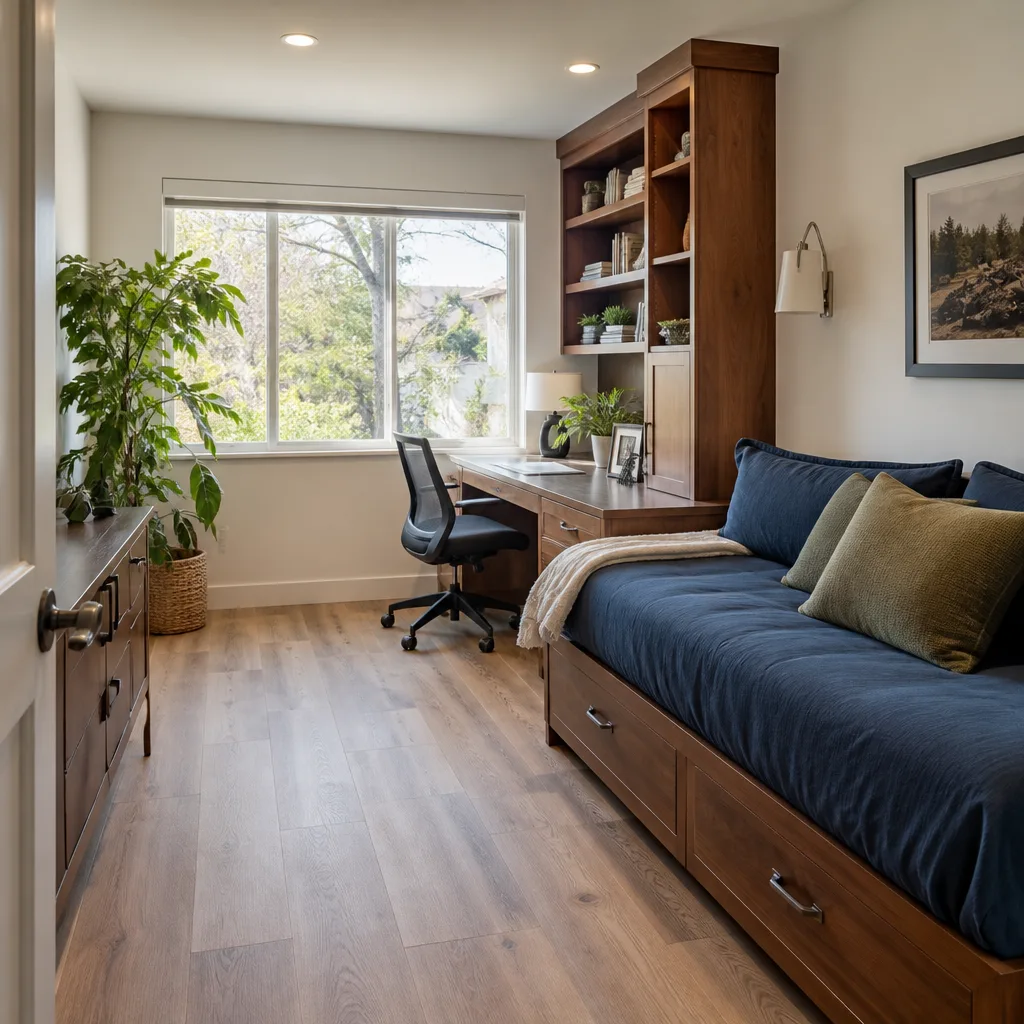
In Houston, a CWS home addition or ADU structural repair and rebuild generally runs between $45,000 and $130,000 installed. The spread comes down to what failed: a tie-in flashing replacement on a small addition might land near the bottom of that range, while a full foundation correction, reframing, and new electrical rough-in on a freestanding ADU pushes toward the top.
Here’s what falls inside a typical CWS repair scope with us:
- Tie-in flashing and weatherproofing replacement: $2,500 – $7,000 depending on access and linear feet.
- Floor joist or girder repair on pier-and-beam: $4,000 – $12,000 when we’re sistering joists and replacing a failed girder.
- Slab edge void fill and re-anchoring: $6,000 – $18,000 for mudjacking or polyurethane injection plus re-doweling the tie-in.
- Full wall assembly rebuild at the tie-in seam: $15,000 – $40,000 when sheathing, framing, insulation, and drywall come out and go back new.
- Complete ADU structural refit: $60,000 – $130,000 for a full gut, reframe, subfloor, rough-in updates, and code-compliant finishes.
Every quote comes as a written line-item price before we touch the job site, and it doesn’t move unless you change the scope. All completed work carries the 365-Day Done Right Promise: if anything we fixed fails inside that first year, we return and correct it at no charge. You’ll have that guarantee in writing, signed, in your hand at closeout.
DIY or Call Us?
For a CWS home addition or ADU, the safe owner-level checks are visual: run your hand along the tie-in seam, watch the doors through a season, check for staining at the base of walls and corners. That’s information gathering, and it’s useful when you call us because it helps us price the likely scope faster. What you should not do is open the wall, try to jack a floor, or attempt to re-flash a tie-in from a ladder. Structural work on an occupied addition involves load paths, and a floor you jack wrong can crack drywall, pinch plumbing, or worse. Same goes for anything electrical or gas inside an ADU: Houston code requirements are specific, and pulling a permit on unpermitted work from the original CWS build is exactly the kind of fix that costs three times more when it’s done twice.
If you’ve spotted a problem, call (940) 289-7658. We’ll assess it, give you a written scope and price, and start the rebuild right.
FAQs
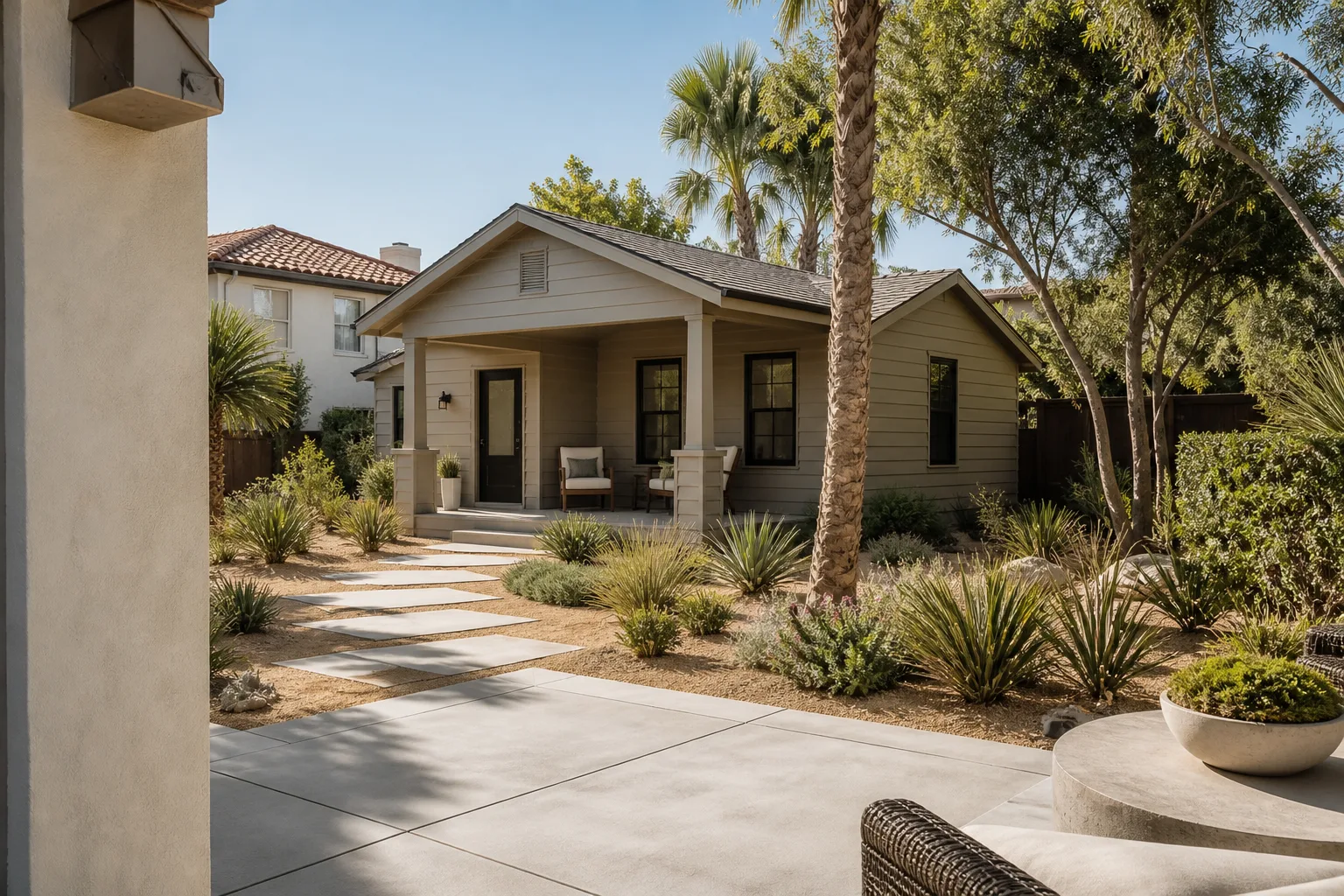
A properly built CWS addition or ADU in Houston should deliver 40 to 60 years of structural service, but the original tie-in flashing and housewrap often need attention inside 10 to 15 years because Houston’s heat and humidity break down builder-grade materials faster than the rest of the assembly. Call (940) 289-7658 if your addition is showing signs at the seam, and we’ll tell you what’s realistic for your specific build.
Yes, when the framing is still sound and the problem is isolated to flashing or a failed section of sheathing, a targeted repair is often the right call; when water has reached the studs or the floor system shows movement, a full rebuild of that section is the honest fix. We’ll show you what we found and let the scope speak for itself.
A flashing-and-sheathing repair on a CWS addition typically runs three to five working days; a full tie-in rebuild or ADU structural refit can run two to six weeks depending on permit turnaround and what’s behind the walls. We give you a written schedule with the quote, and we hold it unless the City of Houston inspection process forces a change.
We stock the common CWS tie-in flashings, structural fasteners, and weatherproofing materials on our trucks, along with compatible substrate components from documented brands we install across Houston; anything specialty-order arrives before the scheduled start date. You won’t wait on a part that should have been ordered a week before we showed up.
Written by Curtis Lane, Owner, Bradford Remodeling Co Houston at Bradford Remodeling Co Houston, serving Houston and nearby areas.
Call (940) 289-7658 for a free estimate on your CWS home addition or ADU repair. Straight scope, straight number – that’s the whole conversation.


