
Free written scope consultation - allowances, timeline, and change-order rules on paper before a single trade is scheduled
Dvele Home Additions & ADU: The Houston Owner’s Guide
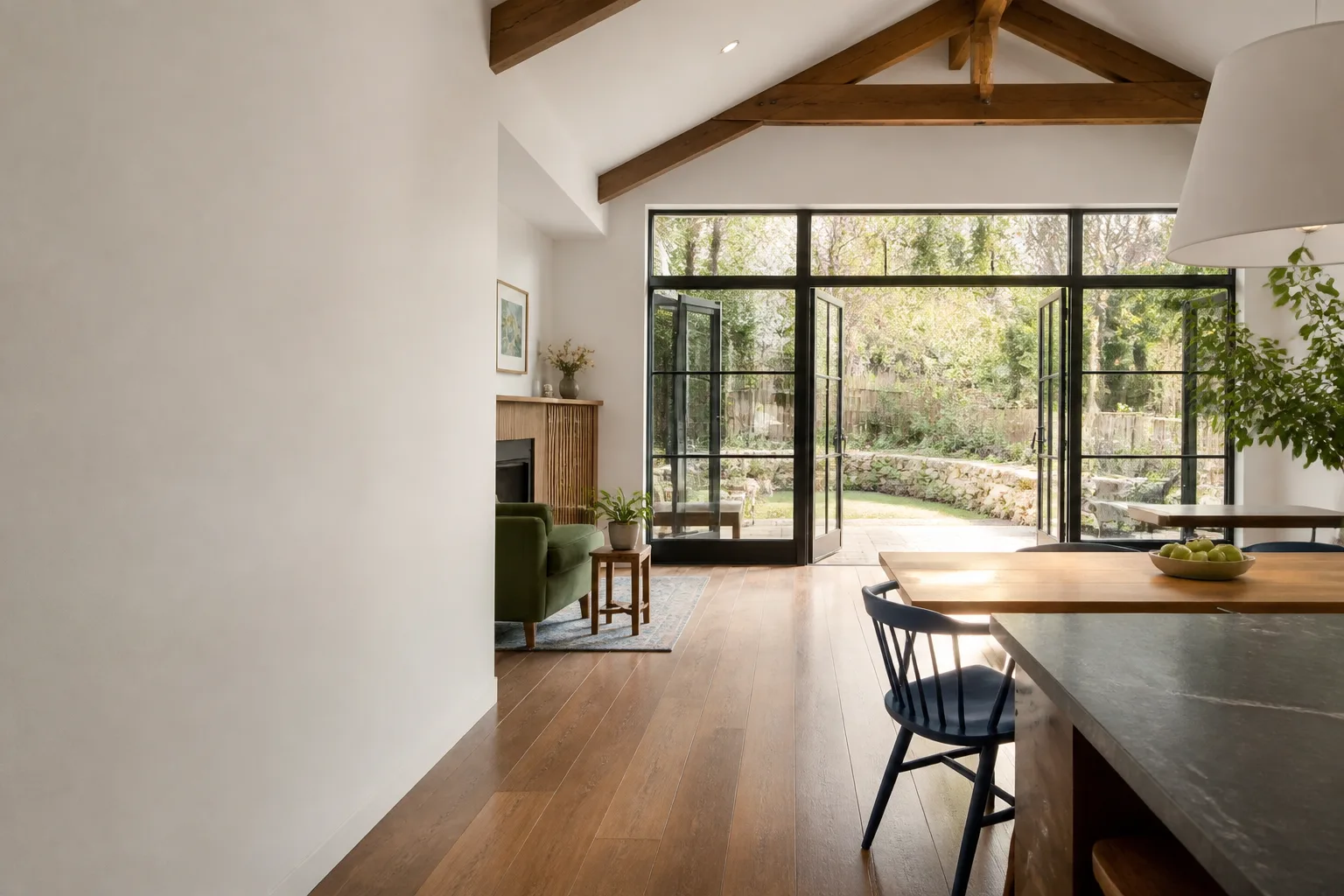
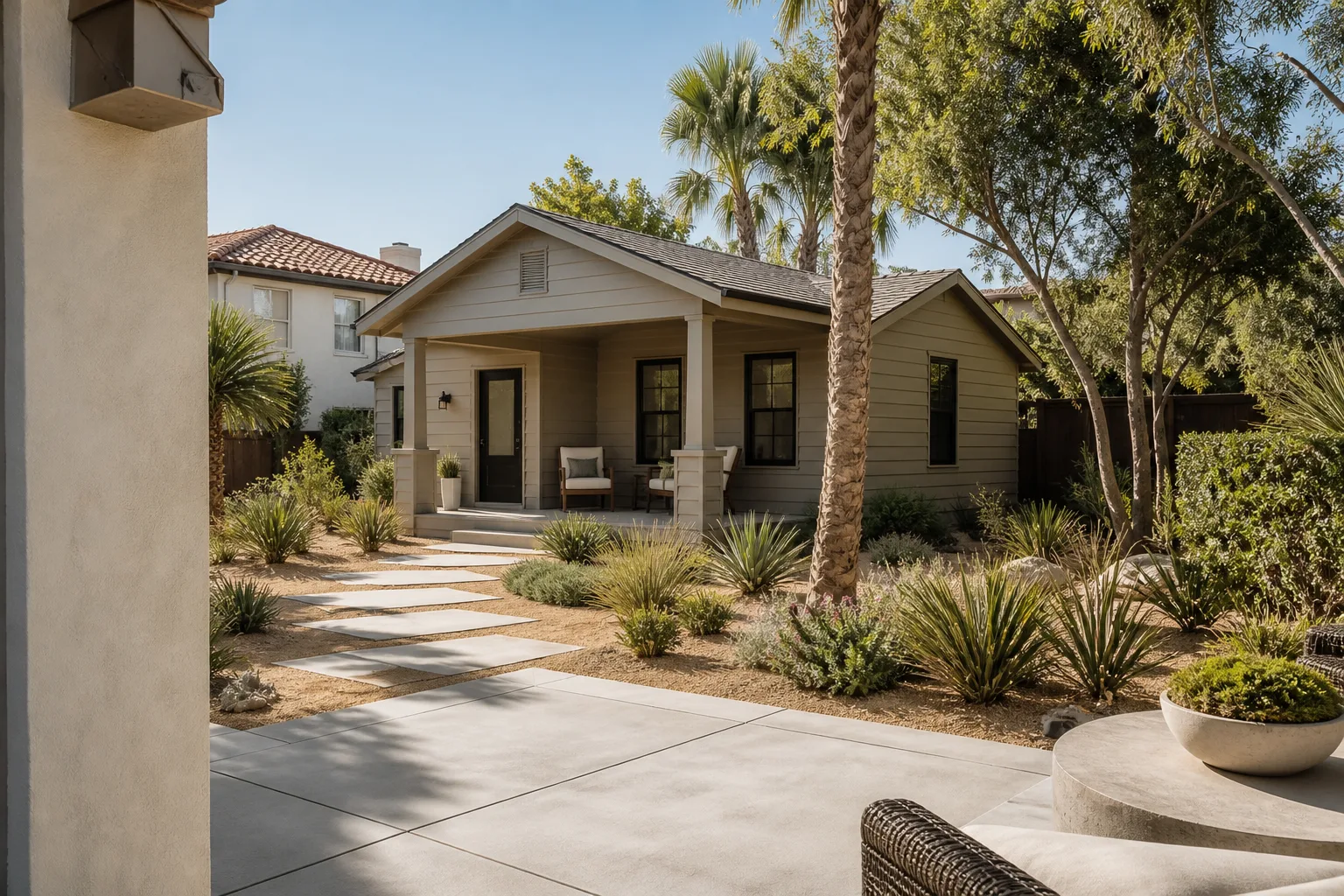
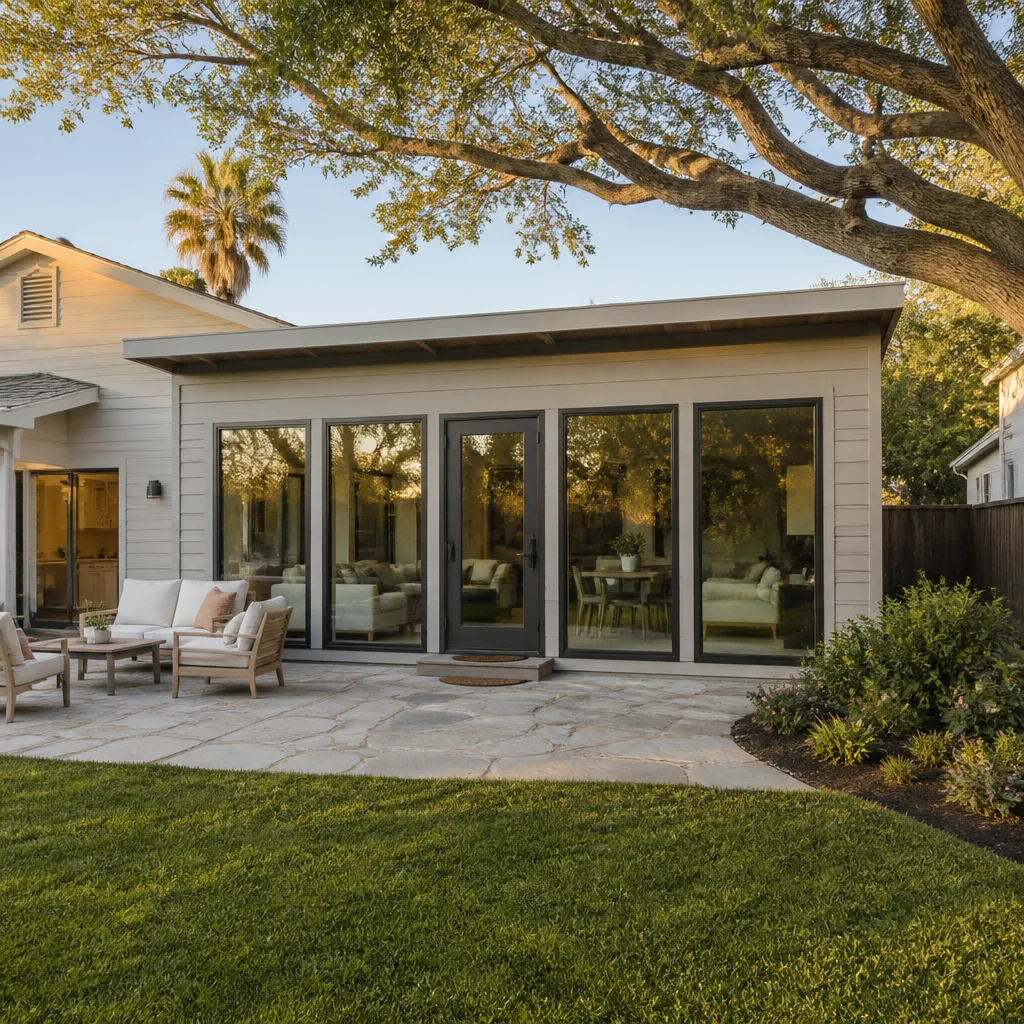
If you own a Dvele home in Houston and you’re planning an addition or a detached ADU, the installed price for a custom home addition in this market runs $45,000 – $130,000, while a full Dvele-compatible ADU construction typically lands between $90,000 and $220,000. We stock the framing, sheathing, and finish materials needed to match Dvele’s modular wall system specs, and we can typically get a crew on-site within two weeks of a signed scope. Most Houston Dvele owners discover they need this work when they outgrow the original footprint, when a home office becomes non-negotiable, or when they want rental income from a backyard unit and realize the original envelope was never designed for a bolt-on.
Key Takeaways:
- Dvele homes use European-modular wall panels with specific attachment points, so additions must be framed to match the original thermal envelope, not just nail-on dimensional lumber.
- Houston’s clay soil shifts seasonally; any Dvele addition or ADU foundation needs a soil-stability review before permit drawings are finalized.
- We’re an independent contractor in Houston, not affiliated with Dvele, but we work with their panel dimensions and wiring chases on a regular basis.
- Written price before work starts. Every time. No numbers that move at the door.
Which Dvele Models This Applies To
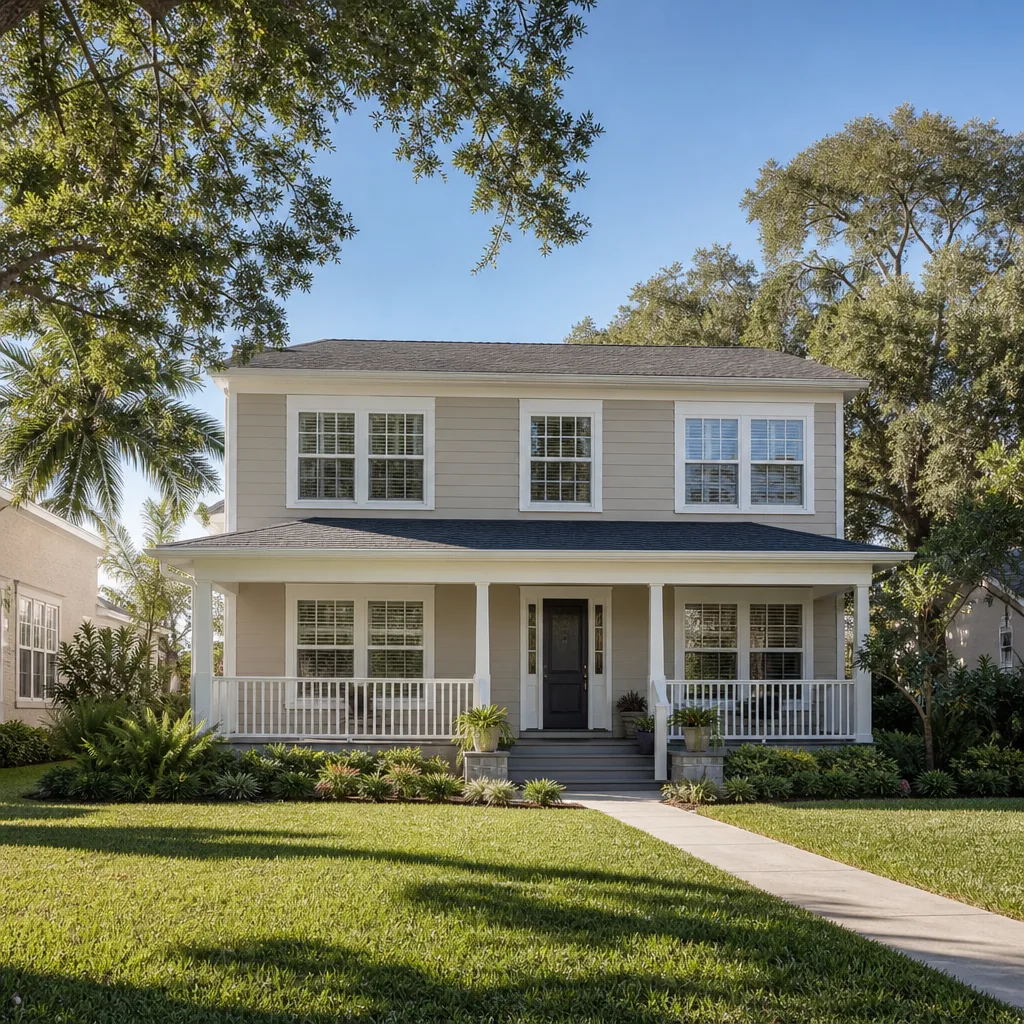
This applies to every Dvele model we see in the Houston area: the Haven, the Pine, the Apex, and the Ridge all use the same modular chassis system, which means the approach is consistent but the attachment details change with wall height and roof pitch. Dvele panels are factory-cut with horizontal wiring chases at 24 inches and 48 inches above subfloor; when we frame an addition, we match that chase layout so the new space doesn’t become a dead zone for new circuits. The critical compatibility gotcha is the exterior wall-to-roof junction: Dvele uses a structural ridge beam with a specific shear rating, so any addition that ties into the roofline has to carry that load path through to the foundation. It’s not a place for guesswork.
For identifying your model, check the label on the interior of the utility closet door or the back side of the electrical panel cover. Dvele stamps the model name, year of manufacture, and chassis serial there. If that label is missing, we measure the wall-panel thickness (Dvele uses a 6 1/2-inch cavity, not the standard 5 1/2-inch you’d find in stick-built Houston homes) and pull the factory wiring chase locations. On the OEM-versus-aftermarket question: for framing, sheathing, and mechanicals, we use documented name-brand materials including James Hardie exterior products and GAF roofing, with specs that meet or exceed the original envelope. Dvele’s custom cabinetry and trim are factory-specific, so where a part is cosmetic and model-matched, we order from the Dvele supply chain rather than substitute.
Styles & brands we work with







Signs Your Dvele Home Additions & ADU Is Failing
- You’re maxing out your panel’s electrical capacity. Dvele homes ship with a service panel sized for the original square footage. If you’re planning a second kitchen, a mini-split, or a laundry stack in the new space, the existing panel often won’t carry the load. This is the most common reason Dvele additions stall at permit review.
- The original roofline shows a dip or a ridge separation at the junction. Houston’s humidity and seasonal wind load put real stress on the modular panel-to-roof connection. If you see a visible deflection or drywall cracks radiating from ceiling corners, the original tie-in has moved.
- You notice standing water or soft soil at the back of the lot where an ADU would sit. Houston clay expands and contracts; a slab-on-grade ADU without proper soil prep will crack within two to three years. We see this on nearly every lot in Meyerland and Spring Branch that hasn’t had a geotech review.
- Door frames and windows bind in humid months. If existing doors are already rubbing in July and August, an addition framed without accounting for seasonal movement will make it worse. We frame with that movement budgeted in.
- The existing HVAC short-cycles or the new space never reaches set point. A Dvele addition that isn’t tied into the original ERV and mini-split system properly will leave the new square footage clammy and the old system overworked. This is a duct and load-calc problem, not a thermostat setting problem.
See the difference
 Before
 After
After Before
 After
After Before
 After
AfterReplacement Cost & What’s Included
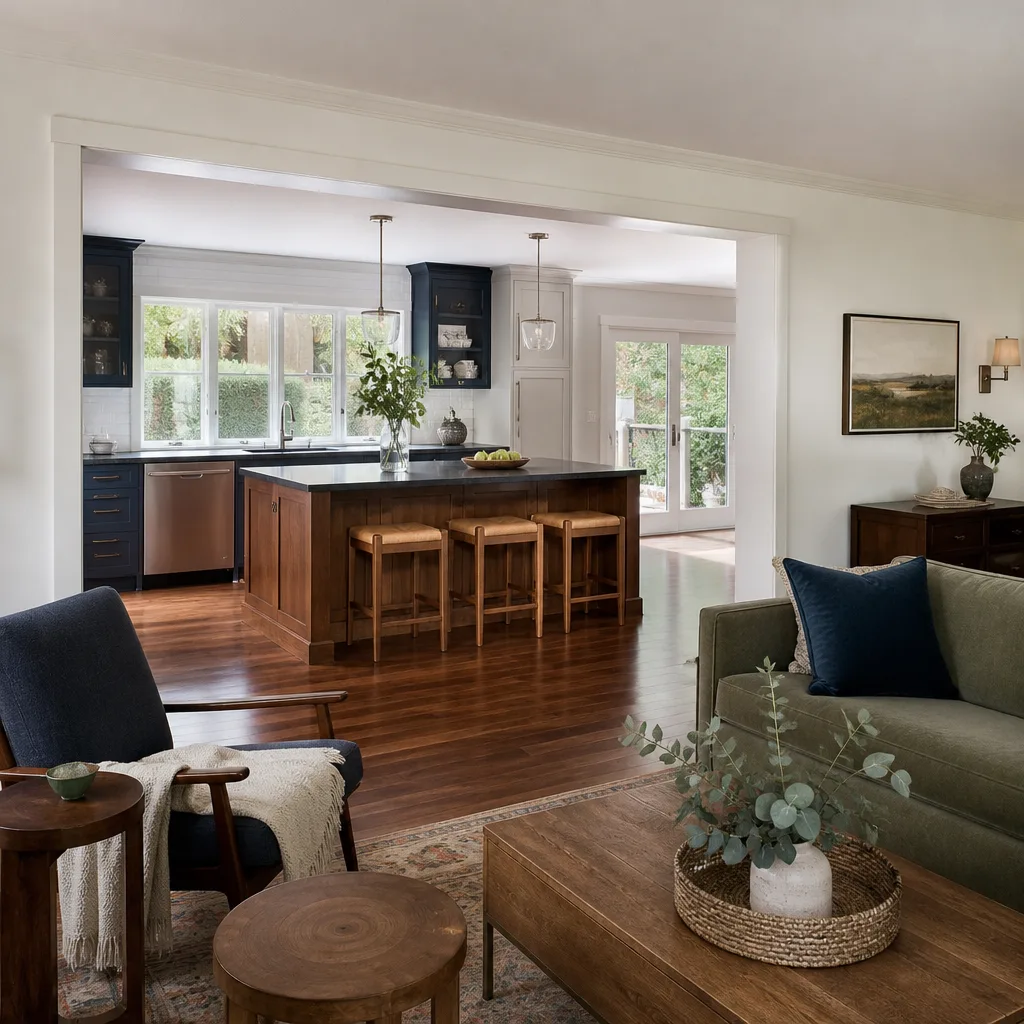
For Houston Dvele owners, here’s how the numbers break down on additions and ADUs:
- Home Addition (Dvele-compatible): $45,000 – $130,000 installed
- ADU Construction (full unit, Dvele-matched): $90,000 – $220,000 installed
- Garage Conversion (to living space): $30,000 – $80,000 installed
The range is driven by square footage, foundation work, roof tie-in complexity, and whether we’re pulling new service from the pole or just adding a subpanel. Every line-item price is written before we start: materials separated from labor, permits called out, waste removal included, and the 365-Day Done Right Promise in writing at the close of the job. If the work fails within the first year, we come back and correct it at no charge. That’s what the guarantee says, and that’s what it means.
DIY or Call Us?
Here’s the honest split. An owner can safely walk the perimeter and check for visible settlement, check panel capacity against the new load, and mark out where the footprint would sit. That’s useful intel for a first conversation. What an owner shouldn’t do is frame into a Dvele modular wall without knowing the chase layout and shear requirements. A wrong cut into a factory panel can compromise the entire wall section and voids your warranty with Dvele. Electrical work on a service panel is deadly, plain and simple. If you’re planning an addition or ADU on a Dvele home in Houston, call (940) 289-7658 and we’ll walk the site with you, no charge for the estimate. Straight scope, straight number, that’s the whole conversation.
FAQs
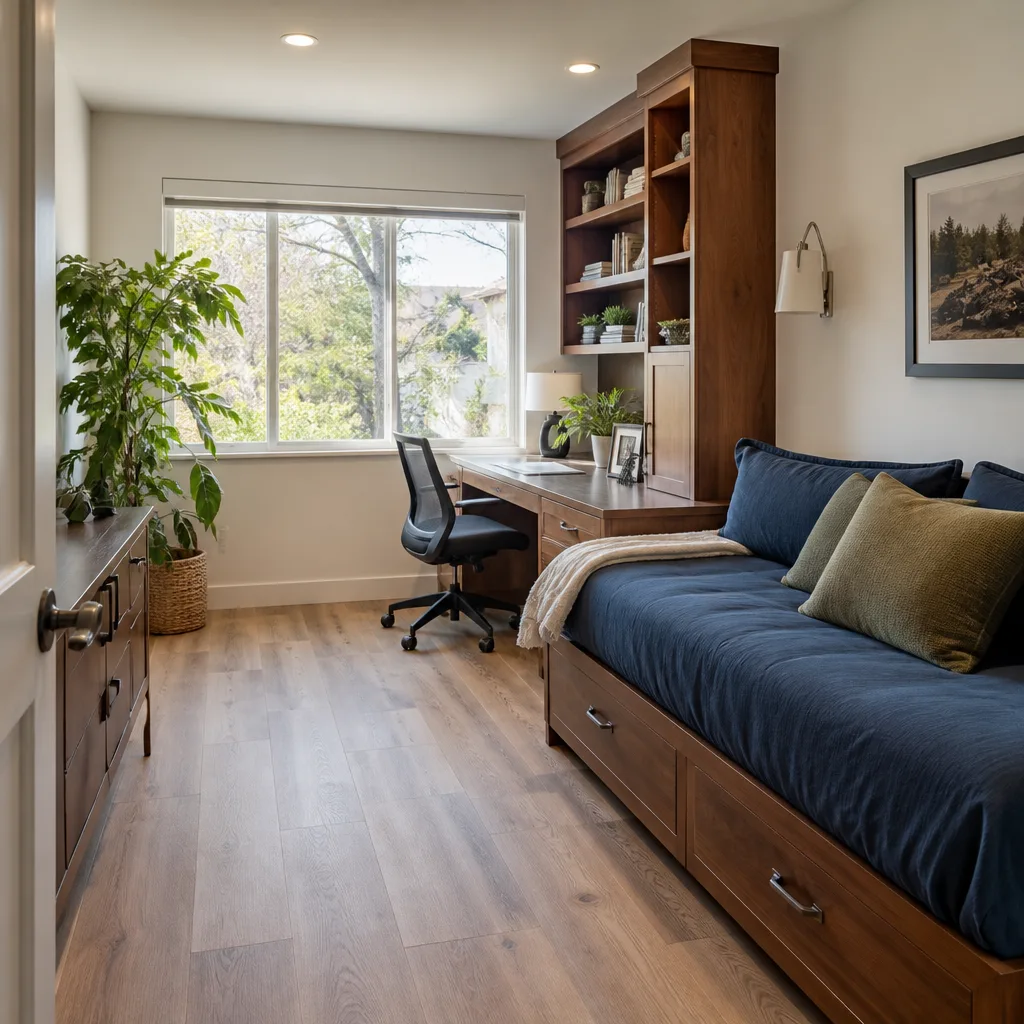
A properly framed addition or ADU on a Dvele home in Houston, with the soil stabilized and the roof tied in correctly, will last 30-plus years before any major envelope work. The failure points we see are almost always foundation-related, not framing-related. The 365-Day Done Right Promise covers the first year in writing; after that, the work should hold for decades if the scope was right. Call (940) 289-7658 for a site-specific look.
In most cases, yes. If the issue is a roof tie-in failure, a panel that’s moved at the sill, or a mechanical shortfall, we can repair the specific problem rather than tear out and rebuild. Full teardown is the exception, not the rule. We’ll tell you which one you’re looking at in the written scope. Call (940) 289-7658 and we’ll price it out.
In Houston, a typical Dvele-compatible addition runs 10 to 16 weeks depending on foundation work, permitting, and weather. A full standalone ADU runs 4 to 7 months. We document every stage in the written scope so you know the sequence before the first hole is dug. Call (940) 289-7658 for a project-specific timeline.
We keep framing lumber, Zip sheathing, James Hardie siding, GAF roofing, and the standard Dvele-compatible panel brackets in our Houston inventory. Factory-specific cosmetic pieces, like Dvele’s trim profiles and millwork, come from the Dvele supply chain and typically arrive within two to three weeks. We’ll tell you which items are stocked and which are ordered before you sign anything. Call (940) 289-7658 for an exact material list.
Written by Curtis Lane, Owner, Bradford Remodeling Co Houston at Bradford Remodeling Co Houston, serving Houston and nearby areas.


