
Free written scope consultation - allowances, timeline, and change-order rules on paper before a single trade is scheduled
Quikrete Kitchen Remodeling: The Houston Owner’s Guide
If you’re looking for Quikrete-specific kitchen remodeling work in Houston, the honest answer is this: Quikrete makes concrete and masonry products, not kitchen cabinets or countertops. But Quikrete products show up in Houston kitchens constantly, as countertop bases, floor levelers, tile backer board substrates, and structural underlayment. Bradford Remodeling Co Houston installs and repairs these applications daily, with full kitchen remodels running $14,000 to $45,000 depending on scope. Most owners call us when a Quikrete-based surface has failed, cracked, or shifted under Houston’s humidity and clay soil conditions, and they need someone who understands exactly what went wrong under the finish layer.
Here’s what that looks like in practice. A homeowner in Montrose pulls up cracked tile and finds the Quikrete mortar bed underneath has crumbled into sand. A family in Katy notices their kitchen island countertop has developed a hairline crack running from the sink cutout because the Quikrete base wasn’t mixed or cured correctly. Someone in The Heights opens a cabinet and sees the floor-leveled slab has settled a half-inch on one side. These are the calls we take every week. The Quikrete product did its job for years, then failed, and the fix requires more than a surface patch.
We’re an independent Houston remodeling contractor. We are not affiliated with Quikrete, which means we don’t push one manufacturer’s products when another option fits better. What we do push is doing the base layer correctly so whatever goes on top stays put.
Which Quikrete Models This Applies To
Quikrete’s product line that matters in kitchen remodeling breaks into a few categories, and the failure profile is different for each. Understanding which product you have tells us whether we’re doing a repair or a full replacement.
Quikrete Sand/Topping Mix is the most common base we find under kitchen floor tile and under natural stone or concrete countertop pours. It’s a high-strength, fine-aggregate mix rated around 5,000 PSI when cured properly. Quikrete Floor Mud shows up in thicker applications, usually 1.5 to 2 inches, for leveling old slab floors before new tile goes down. Quikrete Concrete Bonding Adhesive is the acrylic agent used to bond new Quikrete to old Quikrete, and it’s the product most often skipped by rushed installers, which causes delamination failures we fix regularly. Quikrete FastSet Self-Leveling Floor Resurfacer is what you’ll find under modern large-format tile in newer Houston builds.
The compatibility gotcha we see constantly: Quikrete products require specific cure times before the finish layer goes on. Sand/Topping Mix needs a minimum 24-hour cure before tile, and self-leveler typically needs 4 to 6 hours before foot traffic but a full 24 hours before tile adhesive. In Houston’s humidity, those windows stretch longer, not shorter, and many failures trace back to someone rushing the schedule. If your substrate was poured and tiled the same day, that’s likely the root cause of what you’re seeing now.
On OEM versus aftermarket equivalents: there isn’t a meaningful aftermarket for Quikrete bags. Quikrete is itself the commodity standard. The quality variable is the installer’s mix ratio, water volume, and cure discipline, not the bag. We stock Quikrete Sand/Topping Mix, Floor Mud, bonding adhesive, and self-leveler on our trucks, plus the polymer-modified thin-sets and grouts from brands like Laticrete and Mapei that we use over Quikrete bases.
Styles & brands we work with







Signs Your Quikrete Kitchen Remodeling Is Failing
If any of these are showing up in your Houston kitchen, the Quikrete layer underneath is the prime suspect, not the tile or countertop you can see.
- Tile cracking along a straight line. This usually means the Quikrete base cracked first and transferred the fault up through the tile. The crack follows the substrate, not the tile pattern, which is the tell. Houston’s expansive clay soil heaves seasonally, and a rigid cement base without expansion joints will crack every time.
- Hollow-sounding tile when you tap it. The Quikrete bond has released, creating an air gap. This is a classic same-day-tile-over-uncured-base failure, or a bonding adhesive skip. Hollow tile eventually breaks under normal foot traffic.
- Grout turning to dust and falling out. When the base flexes, even slightly, grout is the first casualty. If you’re vacuuming grout out of your floor seams every few months, the movement is coming from below.
- Countertop crack running from the sink or faucet cutout. Concrete and natural stone countertops poured over Quikrete need proper reinforcement and a stress-relief joint at cutouts. A crack radiating from the sink means the base wasn’t reinforced correctly, and it will keep traveling until it’s addressed.
- Floor slope or a visible dip near the stove or island. A Quikrete self-leveler pour that settled wrong or lost moisture too fast in Houston heat creates a low spot. You’ll feel it before you see it, and cabinets sitting on that slab will start pulling away from walls.
See the difference
 Before
 After
After Before
 After
After Before
 After
AfterReplacement Cost & What’s Included
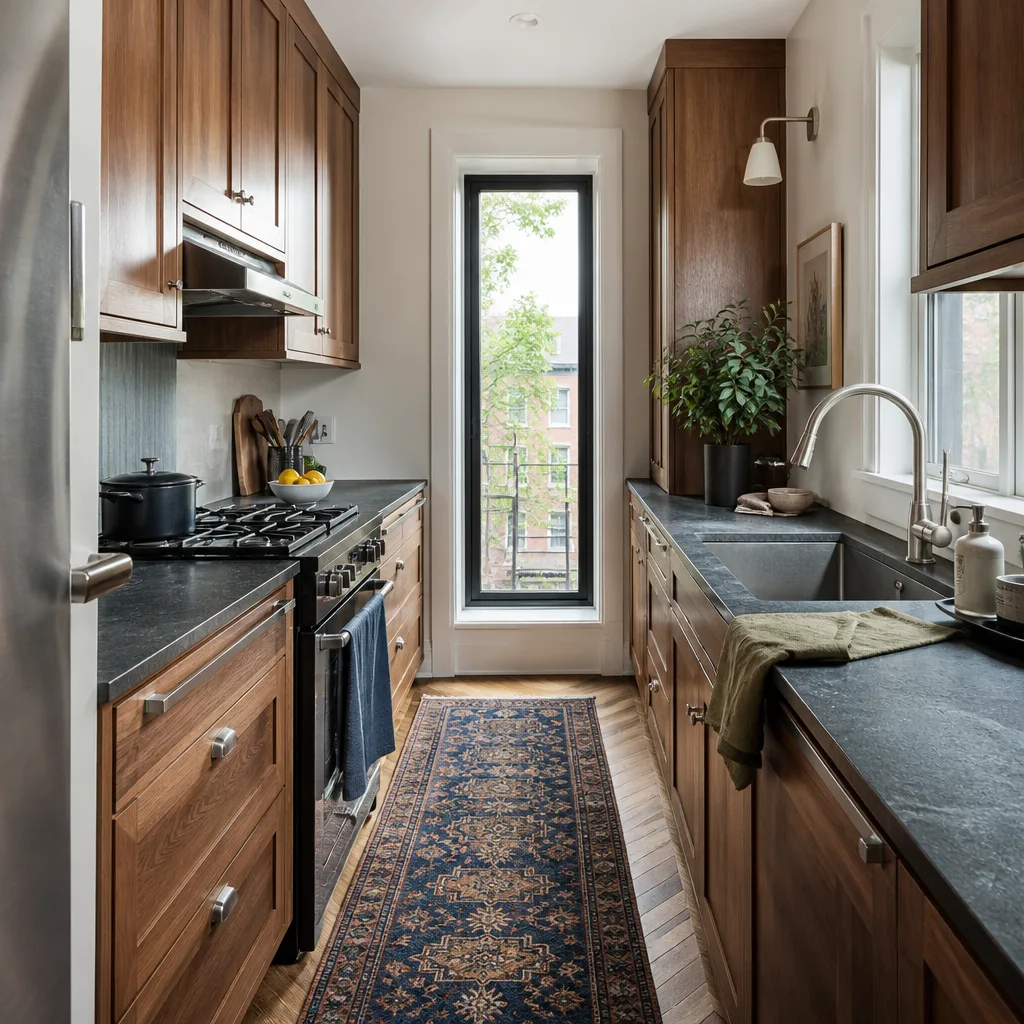
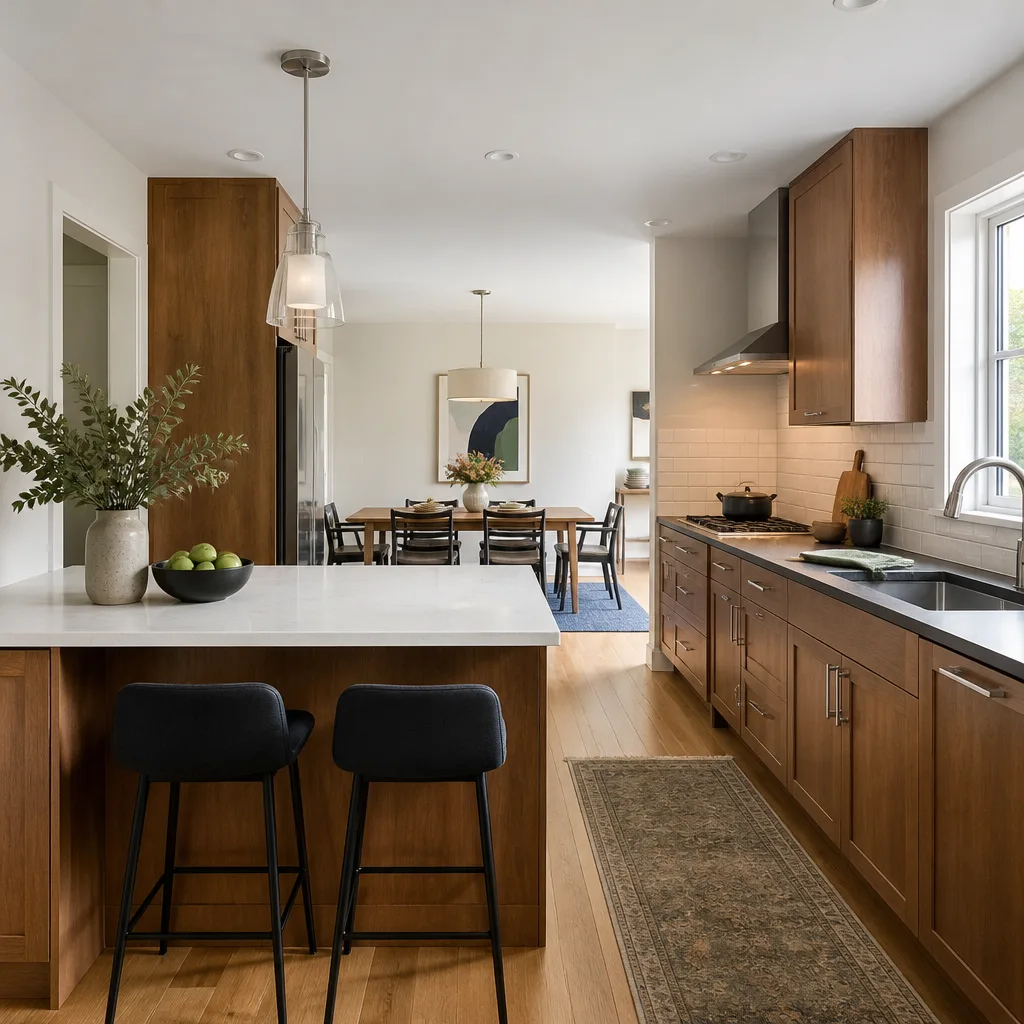
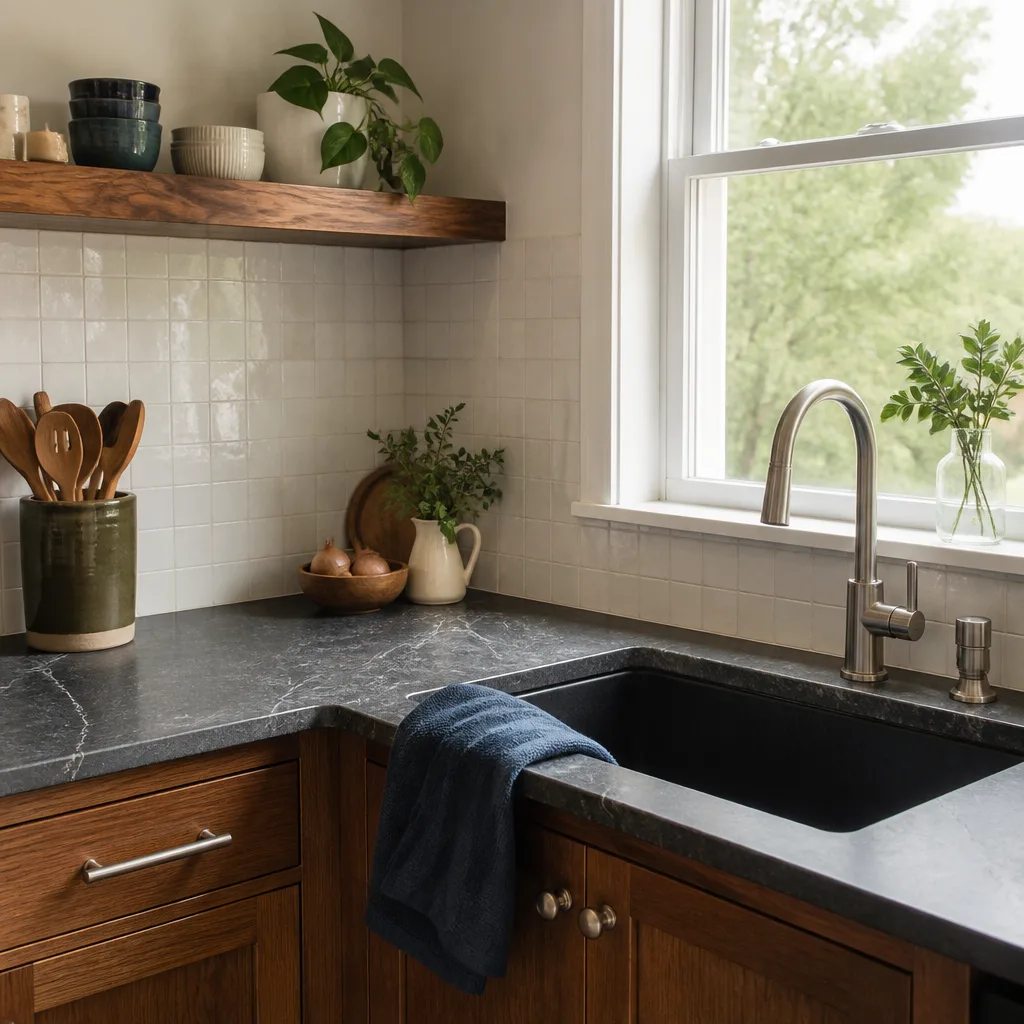
A full Quikrete-involved kitchen remodel in Houston runs $14,000 to $45,000, and here’s what that range actually covers. On the lower end, you’re looking at replacing a failed Quikrete floor mud bed with fresh Sand/Topping Mix, new tile, and refinished or painted cabinets in a modest-size kitchen. The upper end includes full cabinet replacement with KraftMaid or Wellborn, a Cambria or Silestone countertop over new substrate, a full self-leveling pour, new backsplash, and all the plumbing and electrical rough-in work.
The substrate work itself, meaning the Quikrete removal and repour, typically runs $2,000 to $6,500 as a line item inside a larger job. That’s the number that surprises people: the base layer costs real money, but skipping it or doing it thin is exactly what causes the failure you’re now paying to fix twice.
From Bradford Remodeling Co Houston, every quote includes the full parts-and-labor breakdown before we touch the job. You get the price for Quikrete materials, the price for installation labor, the price for demolition and disposal of the failed base, and the warranty terms in writing. Our written price doesn’t move. The 365-Day Done Right Promise applies to the full project: if the substrate fails, the tile cracks, or anything we touched doesn’t hold within the first year, we return and correct it at no charge.
DIY or Call Us?
You can safely diagnose. Pull a loose tile, inspect the base, tap for hollow spots, check for level with a straight edge. That’s information, and it helps you understand what you’re dealing with.
But replacing a Quikrete substrate in a Houston kitchen is not a weekend job. Demolition of a failed cement base requires a demo hammer and a respirator, because Quikrete dust contains crystalline silica. Mixing and placing Sand/Topping Mix to spec means controlling water ratios in Houston’s humidity, which works against you at every step. Getting a self-leveler pour wrong means tearing it out and starting over. This is one of those jobs where the DIY attempt almost always costs more than hiring it out the first time, because the material is cheap but the correction is expensive. Call (940) 289-7658 and let us put an exact number in writing. No pressure, no vague pricing, just the scope and the cost.
FAQs
A properly mixed and cured Quikrete substrate should last 20 to 30 years in Houston conditions. The finish surfaces on top may need work before that, but the base itself shouldn’t fail inside two decades if it was mixed to spec, cured fully before the finish went on, and installed with expansion joints where the slab layout demands them. If your Quikrete base failed inside 10 years, the cause is almost always installation error or missing joint work, not the material.
Small stabilization cracks under tile can sometimes be addressed with crack isolation membrane and a fresh tile set, which is a legitimate repair when the crack is hairline and not moving. Structural gaps, crumbling mortar, or a slab that has settled more than a quarter-inch requires removal and replacement. Houston’s clay soil doesn’t stop moving, so a repair that ignores the movement will fail again within a season. Call (940) 289-7658 and we’ll tell you which situation you have, in plain terms, with the price for each path.
Plan on 2 to 3 days for demolition and base preparation, plus cure time before the finish layer. Sand/Topping Mix needs at least 24 hours before tile set. Self-leveler typically needs 24 hours under Houston humidity. The full kitchen, including cabinets, counters, and backsplash, usually runs 3 to 6 weeks from demo to final walkthrough depending on scope. We’ll put the schedule in writing with the price.
Yes. Our Houston crews carry Quikrete Sand/Topping Mix, Floor Mud, concrete bonding adhesive, and self-leveling floor resurfacer as standard truck stock. That means we don’t have to make a supply run mid-job for the common Quikrete products, which keeps the schedule intact. We can also match your existing Quikrete run with the exact same mix numbers so the repair transitions to the original substrate cleanly.
Written by Curtis Lane, Owner, Bradford Remodeling Co Houston at Bradford Remodeling Co Houston, serving Houston and nearby areas.


