
Free written scope consultation - allowances, timeline, and change-order rules on paper before a single trade is scheduled
Sakrete Home Additions & ADU: The Houston Owner’s Guide
If you’re pricing a Sakrete-based home addition or ADU in Houston, the installed range runs $45,000 – $130,000 for additions and $90,000 – $220,000 for a full detached ADU, depending on square footage, foundation type, and finish level. We install Sakrete products as part of our concrete and foundation scope on additions and ADU builds across Houston, and the written price you get before work starts is the price you pay at close. Most owners call us after a bad experience: a slab pour that cracked within six months, a stem wall that wasn’t tied correctly to the existing foundation, or an ADU pad that settled and pulled away from the wall line.
Sakrete makes concrete mixes, repair materials, and sealers used in slab pours, footings, stem walls, and masonry on additions and ADUs. When the Sakrete component fails on one of these builds, what you’re really looking at is almost never the bagged mix itself. It’s the prep underneath: poor compaction, missing vapor barrier, wrong mix spec for the load, or water added during placement. In Houston, where clay soil expands and contracts with every wet-dry cycle we get, a slab that wasn’t poured on properly prepared subgrade will show it within two seasons.
We’re an independent Houston remodeling contractor. We use Sakrete products on our jobs where the spec calls for them, but we’re not affiliated with Sakrete, and we don’t sell bags off a shelf. What we do is correct failed Sakrete work and build additions and ADUs where the Sakrete component is spec’d, poured, and cured so it holds.
Key Takeaways:
- Installed addition range in Houston: $45,000 – $130,000; ADU: $90,000 – $220,000
- Most Sakrete “failures” are substrate or prep failures, not mix failures
- Houston clay soil demands proper compaction and a vapor barrier. Skip either and the slab is on borrowed time
- Every Bradford project gets a written price, a signed scope, and the 365-Day Done Right Promise
Which Sakrete Models This Applies To
Sakrete isn’t like an appliance brand where you match a model number to a serial plate. What you’re matching is the mix spec to the application. For a home addition stem wall in Houston, the typical spec is a 3,000 PSI or 4,000 PSI concrete. For an ADU slab that will carry a small dwelling, you want 4,000 PSI minimum with fiber reinforcement or wire mesh. Sakrete’s High-Strength Concrete Mix and their 5000 Plus both hit those numbers when mixed dry per the bag, but we’ve walked onto Houston job sites where a 3,000 PSI general-purpose mix got used on an ADU pad because that’s what was on the pallet at the big box store.
That’s the compatibility gotcha: the PSI rating on the bag is only reached with the correct water ratio. Add too much water to make it flow easier and you’ve dropped the cured strength by a third or more. We see this in Houston all the time on homeowner-poured ADU pads, especially when someone is working a slab in July and trying to keep the mix workable in 98-degree heat. The fix for that isn’t water. It’s a proper cold-joint plan, shade, and pacing the pour. Those are the things you’re actually paying for on a Brad ford job.
The OEM-versus-aftermarket question doesn’t apply the way it does with, say, a KraftMaid drawer slide or a Cambria sink cutout. Sakrete is the commodity standard. The real decision is whether the concrete scope gets bid as bagged mix versus a ready-mix truck delivery. For anything over about a half yard of concrete, which is every ADU slab and most addition footings, we order ready-mix from a Houston batch plant and use Sakrete products for the detail work: repair mortar at the tie-in to the existing slab, anchoring grout for sill plates, and sealers after cure. Buying 80-pound bags for a 20-yard pour is a false economy anywhere, but especially in Houston where a truck can have the mix placed before a bag-mix crew gets their third load mixed.
Styles & brands we work with







Signs Your Sakrete Home Additions & ADU Is Failing
Here’s what a failing concrete component on a Sakrete addition or ADU actually looks like in Houston, and what’s behind it:
- Hairline cracks spidering across the slab within the first year. This is usually plastic shrinkage from water added during the pour or curing that happened too fast in Houston heat. The slab loses moisture at the surface before it gains strength, and the cracks telegraph that.
- A visible gap between the stem wall and the slab edge. This points to differential settlement. In Houston, that’s almost always clay soil that wasn’t properly compacted under the pour, or a stem wall poured without a proper keyway to lock it to the footing.
- Doors and windows in the addition binding at the top corners. When the slab moves, the framing above it racks. If a door that swung fine in March starts sticking in September, the concrete beneath you is settling unevenly.
- Water pooling against the stem wall after a normal rain. This is a grade and drainage problem, not a concrete problem, but it becomes a concrete problem fast. Houston gets 50-plus inches of rain a year. Water sitting against a foundation for days will find its way through any cold joint.
- Efflorescence, a white powdery film, blooming on the interior slab. This means moisture is moving through the slab. That tells you the vapor barrier was cut, missing, or punctured during the pour. In a Houston addition, that moisture feeds mold inside walls and under flooring.
See the difference
 Before
 After
After Before
 After
After Before
 After
AfterReplacement Cost & What’s Included
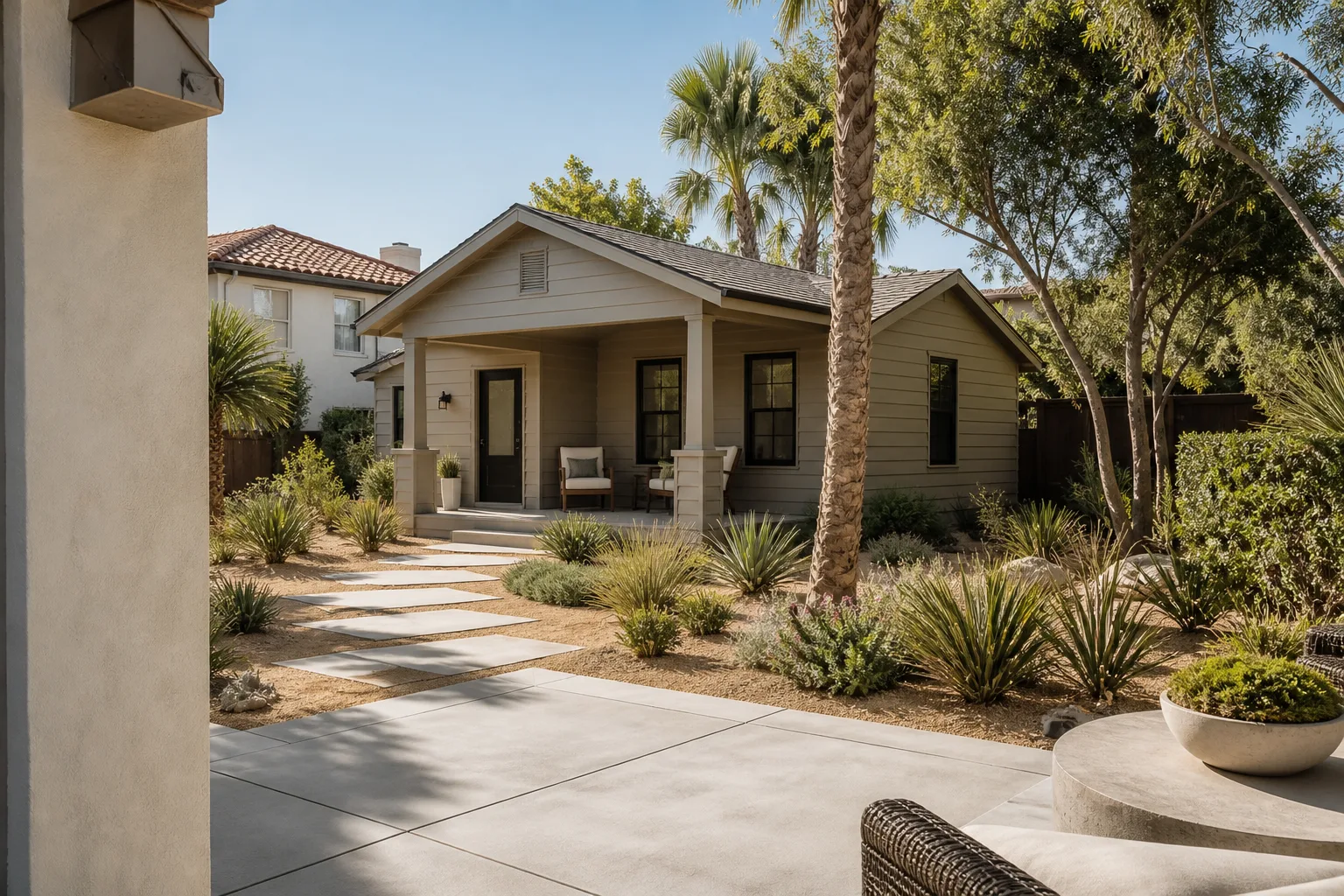
The lead number for a Sakrete-compatible home addition in Houston is $45,000 – $130,000. A detached ADU runs $90,000 – $220,000. What drives the spread is square footage first, then foundation method. A pier-and-beam addition lands lower than a slab-on-grade of the same size because you’re not paying for the full concrete scope. A two-story addition pushes you toward the top of the range because the footings have to carry more load, which means bigger beams, more rebar, and a more careful soil compaction plan.
If the Sakrete component itself is the failure, meaning a slab or stem wall that needs to come out and be repoured, a partial slab replacement in Houston typically lands between $4,500 and $12,000 per pour depending on access, size, and whether we’re cutting the existing slab back to sound concrete. What’s included in any Bradford number: demolition and haul-off, soil compaction, vapor barrier, rebar or mesh per code, the correct PSI mix, edge forms, finishing, cure and seal, and a written workmanship guarantee. The 365-Day Done Right Promise covers that concrete for one full year. If it cracks, heaves, or settles inside that window, we come back and correct it at no charge. You get that in writing before the first tool comes off the truck.
DIY or Call Us?
Pouring concrete isn’t like hanging a door where you can take your time and fix a mistake. Once the Sakrete hits the subgrade, you have minutes to work it before it starts going off, and in Houston’s heat you have fewer minutes than you think. There are things an owner can safely check before calling: Is the slope carrying water away from the addition? Are gutters dumping at the corners? Is there a visible gap opening between the slab and the stem wall? Those observations help us scope the repair faster, and they cost you nothing.
But cutting out a failed section, compacting Houston clay, setting forms, tying rebar, and pouring a structural slab is not a weekend project. The risk isn’t just a bad pour. A stem wall that isn’t tied correctly to the existing foundation compromises the structure above it. That’s a life-safety issue, not a cosmetic one. Curtis Lane has been running crews in this market for over a decade, and he’s read enough scopes to know the difference between a fix a homeowner can do and a fix that needs a real pour crew. For foundation and slab work, that’s where we draw the line. Call (940) 289-7658 and we’ll give you a straight read on what you’re looking at.
FAQs
A properly prepped and cured addition slab in Houston should last 50 years or more before you’re thinking about serious repair. The failure we see isn’t age. It’s the first three years, when a slab that wasn’t compacted or cured right shows its problems. Clay soil cycles through Houston’s wet and dry seasons move a bad slab fast. A good slab stays put.
It depends on the crack type and location. Hairline surface cracks from shrinkage are cosmetic and can be sealed. Cracks wider than a quarter inch, cracks that keep growing, or any crack with vertical displacement means the slab is moving, and the fix is usually cutting that section out and repouring on properly compacted soil. Patching over a moving slab just means paying twice. Call (940) 289-7658 and we’ll tell you which one you’ve got.
A standard single-story addition in Houston runs roughly 8 to 16 weeks from first inspection to final walkthrough. A detached ADU runs 4 to 9 months depending on finish level and utility work. Concrete scope alone, from forms to cure, is typically a 5-to-10-day portion of that schedule. Weather delays happen, but we build the schedule around Houston’s rain patterns where we can.
We don’t warehouse bagged Sakrete mix. We source it per job along with ready-mix from Houston batch plants for anything over a half yard. What we keep on hand is the finishing and repair material: Sakrete concrete repair mortar, anchoring grout, and sealers. We’ll spec the right Sakrete product for your pour and have it on site the day we need it. Call (940) 289-7658 for a written quote, and the price you get is the price you pay.
Written by Curtis Lane, Owner, Bradford Remodeling Co Houston at Bradford Remodeling Co Houston, serving Houston and nearby areas.


